
Financial Wellness
How to Build a Stress-Free Holiday Budget
Updated 11/13/2026

November 13th, 2026 – The holidays are supposed to be a time to enjoy family, friends, traditions, and a little break from the everyday routine. But between gifts, travel, food, decorations, and all the extra activities, it's easy for holiday spending to get ahead of you.
Whether you have already created a holiday budget every year or are simply trying to be more intentional with your spending this season, the key is knowing what you have to work with and keeping an eye on where it goes.
A little planning can help you enjoy the season without starting the new year wondering where all your money went.
1. Know What You Have to Work With
Before making changes to your holiday spending, take a look at your overall budget. How much can you realistically put toward the holidays without falling behind on regular bills or dipping into money you need for other expenses?
If you already have a holiday spending plan, use it as your starting point. Check how much you've saved, how much you've already spent, and what you still have available.
It may also help to review your regular monthly expenses. Mortgage or rent, utilities, groceries, insurance, and other everyday costs should still come first. Your holiday budget should fit around those responsibilities, not the other way around.
As a general guideline, our partners and financial wellness experts at GreenPath Financial Wellness recommend limiting total holiday spending to approximately 1% of your annual household income or less. For example:
- Annual household income of $50,000 = Holiday budget of about $500
- Annual household income of $75,000 = Holiday budget of about $750
- Annual household income of $100,000 = Holiday budget of about $1,000
This isn't a hard-and-fast rule, but it can serve as a helpful benchmark when deciding what feels manageable for your situation.
The goal isn't to spend as little as possible. It's to have a realistic number in mind so you can make decisions without constantly worrying about the cost.
Holiday Budget Quick Check
Not sure where to start? Try the 1% rule.
Many financial wellness professionals recommend limiting total holiday spending to approximately 1% of your annual income, including:
- Gifts
- Travel
- Decorations
- Holiday meals and entertaining
- Seasonal activities
- Charitable giving
- Shipping and postage
By setting your budget first and then dividing it among categories, you can enjoy the season without carrying holiday debt into the new year.
2. Account for More Than Just Gifts
Gifts are usually the first thing people think about when creating a holiday budget, but they're only one part of the season.
Think about the expenses that tend to sneak up on you. These might include:
- Holiday meals, groceries, and baking supplies
- Travel, gas, hotels, or flights
- Decorations, lights, and wrapping supplies
- Holiday parties, outings, and family activities
- School events, workplace gift exchanges, and teacher gifts
- Charitable donations and seasonal giving
- Postage and shipping costs
You don't necessarily need to plan for every possible expense, but looking beyond gifts can help prevent those smaller purchases from throwing off your budget.
3. Give Every Category a Spending Limit
Once you know what you have available and what you need to account for, divide your budget into categories.
For example, you might decide to spend:
- $500 on gifts
- $200 on food
- $150 on travel
- $50 on decorations
Your numbers will depend on your household and priorities, but assigning a limit to each category gives you a better way to manage your spending.
If one category starts running over budget, look at where you can make adjustments elsewhere. Maybe you spend a little less on decorations so you have more room for an extra family activity.
This is also where it helps to prioritize. Decide which traditions and expenses matter most to your household, then make room for those first.
4. Keep Track of Spending as You Go
A budget only works if you keep up with it.
It's easy to lose track of spending when you're making several purchases throughout the season. A few online orders, a grocery run, and a couple of last-minute gifts can add up faster than you realize.
Try checking your spending once or twice a week. Compare what you've actually spent with the amount you planned for each category.
You can use a spreadsheet, a budgeting app, or even a simple notes page on your phone. The method isn't as important as having a consistent way to keep track.
If you're shopping with someone else, it can also help to keep a shared list of purchases. That way, you're both working from the same numbers and less likely to accidentally buy more than you planned.
(check out our holiday budget worksheet below)
5. Be Strategic About How You Pay for Holiday Purchases
How you pay for holiday purchases can make a difference, especially if you're trying to avoid carrying a balance into the new year.
Whenever possible, use money you've already set aside for holiday expenses. If you use a credit card, have a plan for paying off those purchases rather than assuming you'll figure it out later.
If you're considering a credit card for holiday shopping, take time to understand the interest rate, fees, and rewards. A rewards card may offer benefits on purchases, but those benefits can quickly be outweighed by interest charges if you carry a balance.
MTC Federal's Platinum Mastercard offers points on purchases, along with competitive interest rates. As with any credit card, review the terms and make sure it fits your spending and repayment plans.
The best payment method is one that works with your budget, not one that encourages you to spend more than you intended.
6. Make Your Everyday Spending Work a Little Harder
Holiday budgeting doesn't always mean cutting out every extra purchase. Sometimes, it means making the most of the spending you're already doing.
For example, if you're using your debit card for everyday purchases, MTC Federal's Cash Back Checking offers *5% cash back on eligible debit card purchases. It's not a reason to spend more, but it may be a helpful way to get a little something back on purchases you were already planning to make.
The important thing is to understand the account requirements and keep your spending within the limits you've already established.
*Terms & conditions apply, visit the above link for all details on our Cash Back checking accounts.
7. Use This Year's Spending to Plan for Next Year's Holidays
Here's something worth doing once the holiday season is over: take a look at what you actually spent.
Even if you already create a holiday budget every year, reviewing your spending can help you make next year's plan even better.
Did you underestimate your grocery budget? Spend more on travel than expected? Forget about several gift exchanges? Or maybe you had money left over that you could have put toward something else.
Use those numbers as a starting point for next year.
For example, if your household spent $900 during the holidays, you could work toward setting that money aside throughout the year instead of trying to cover it all in November and December.
That works out to just $75 per month.
One way to make that easier is to keep your holiday savings separate from your everyday spending money. That way, you're less likely to dip into it for other expenses throughout the year.
Make Next Year's Holiday Savings a Little Easier With MTC Federal
If setting money aside for the holidays is something you'd like to get better at, MTC Federal offers a few savings options worth exploring.
- Christmas Club Savings: Specifically designed for holiday savings, this account helps you put money aside throughout the year, with funds automatically transferred to your Share Savings account on October 1st. It’s a great way to have money ready when the holiday shopping season arrives.
- Custom Savings Account: Prefer a little more flexibility? A separate savings account can help you organize money for specific goals, including holiday expenses, without mixing it with your everyday spending.
- Share Certificates: If you have money you won’t need to access for a set period of time, a Share Certificate may be another option to consider. Certificates offer fixed terms and rates, making them worth exploring for savings you can comfortably leave untouched. Early withdrawals are subject to penalties.
You don’t have to save a large amount all at once. Even setting aside a little from each paycheck can make next year’s holiday season feel much more manageable.
A little planning now can mean less financial stress later — and maybe even a little more room in the budget for the things that make the holidays special.
Holiday Budget Worksheet
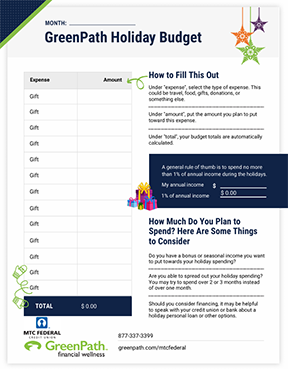
Want to put these tips into practice? Use this simple worksheet to keep your holiday spending organized: Holiday Budget Guide/ Worksheet
Enjoy the Season Without the Financial Stress
A holiday budget shouldn't take the fun out of the season. It should help you feel more comfortable with the choices you're making and give you a little more control over your spending.
Remember, the goal isn't to create the "perfect" holiday. It's to celebrate in a way that aligns with your financial situation. Using simple guidelines, like keeping holiday spending at or below 1% of your annual income, can help you enjoy the season today without creating financial stress tomorrow.
Whether you're keeping track of gifts, planning holiday travel, or setting aside money for next year, small steps can make a big difference.
At MTC Federal, we're here to help you make the most of your money throughout the year. From everyday checking options to savings accounts designed around your goals, explore our account options and find what works for you.
With a little planning, realistic expectations, and a budget built around your priorities, you can enjoy the holidays with more confidence and less financial stress.